Opening the object catalogue…
Objects & stories
CHAIR-001Battle Abbey ceremonial chair
W.56-1980Chairs through time
A Gothic seat designed to turn an English country house into a stage for history. Richard Bridgens and George Bullock made it for Battle Abbey, near the battlefield of 1066. The V&A records both its appearance in Naomi Szeto’s catalogue and its loan to Hong Kong.
- Date
- ca. 1815-1817
- Place of origin
- London
- Maker
- Bridgens, Richard (designer); Bullock, George (maker)
- Material
- Carved oak
- Collection / location
- Victoria and Albert Museum, London
- Accession
- W.56-1980
How it connects to Naomi’s work
The Extraordinary in the Ordinary: Chairs for Viewing the World through Time / 卓椅非凡:穿梭時空看世界 (2014)
The holding museum explicitly cites Naomi Yin-yin Szeto’s 2014 catalogue, page 43. It explicitly states this object was lent to the exhibition.
Catalogue p. 43; V&A API record.bibliographicReferences
CHAIR-002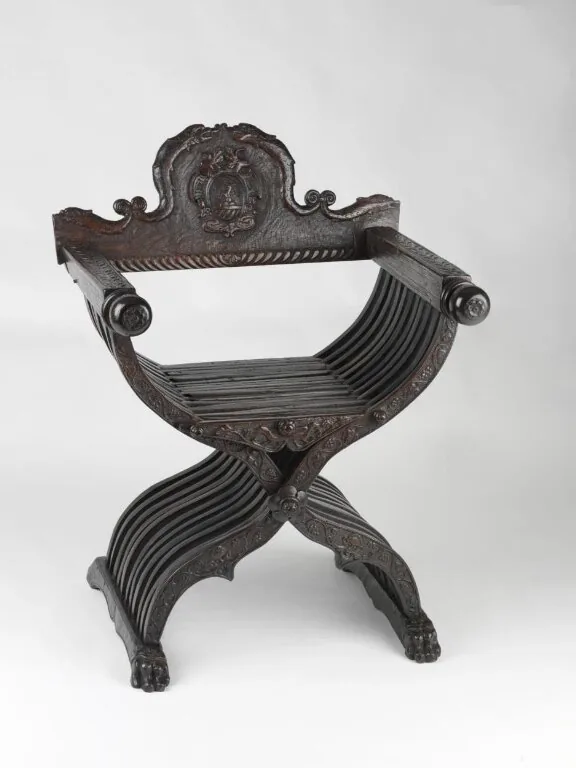
Italian X-framed armchair
7196-1860Chairs through time
An X-shaped seat carried an old vocabulary of rank into the Renaissance household. This Italian walnut chair appears on page 43 of the catalogue and travelled to the Hong Kong exhibition.
- Date
- 16th century
- Place of origin
- Italy
- Material
- Carved walnut
- Collection / location
- Victoria and Albert Museum, London
- Accession
- 7196-1860
How it connects to Naomi’s work
The Extraordinary in the Ordinary: Chairs for Viewing the World through Time / 卓椅非凡:穿梭時空看世界 (2014)
The holding museum explicitly cites Naomi Yin-yin Szeto’s 2014 catalogue, page 43. It explicitly states this object was lent to the exhibition.
Catalogue p. 43; V&A API record.bibliographicReferences
CHAIR-003Italian sgabello chair
7201:1-1860Chairs through time
This sculptural walnut chair could be moved into place when guests arrived. Sgabelli furnished the long reception rooms of Venetian homes. Its carved display surface and its history of later restoration both matter to understanding the object.
- Date
- 1550-1600 (With some parts probably 19th century)
- Place of origin
- Italy (probably Veneto)
- Material
- Walnut, carved
- Collection / location
- Victoria and Albert Museum, London
- Accession
- 7201:1-1860
How it connects to Naomi’s work
The Extraordinary in the Ordinary: Chairs for Viewing the World through Time / 卓椅非凡:穿梭時空看世界 (2014)
The holding museum explicitly cites Naomi Yin-yin Szeto’s 2014 catalogue, page 46. It explicitly states this object was lent to the exhibition.
Catalogue p. 46; V&A API record.bibliographicReferences
CHAIR-004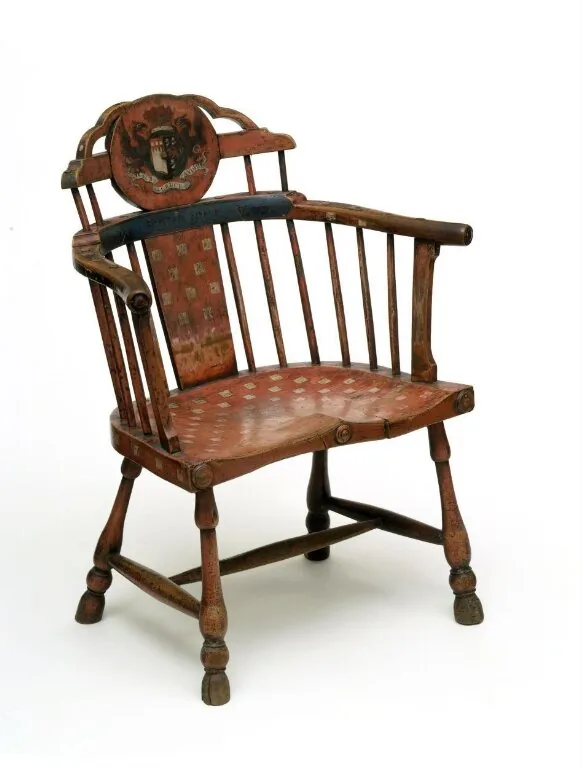
Perceval–Compton Windsor armchair from Enmore Castle
W.34-1976Chairs through time
A humble Windsor form became a family announcement. Its red-and-white paint, heraldic arms, house name and date made the owner’s identity visible to everyone entering the hall. The catalogue features the chair on page 60.
- Date
- 1756 (museum’s current date; later-date proposal recorded and contested)
- Place of origin
- England
- Material
- Beech and elm, with painted decoration
- Collection / location
- Victoria and Albert Museum, London
- Accession
- W.34-1976
How it connects to Naomi’s work
The Extraordinary in the Ordinary: Chairs for Viewing the World through Time / 卓椅非凡:穿梭時空看世界 (2014)
The holding museum explicitly cites Naomi Yin-yin Szeto’s 2014 catalogue, page 60. It explicitly states this object was lent to the exhibition.
Catalogue p. 60; V&A API record.bibliographicReferences
CHAIR-005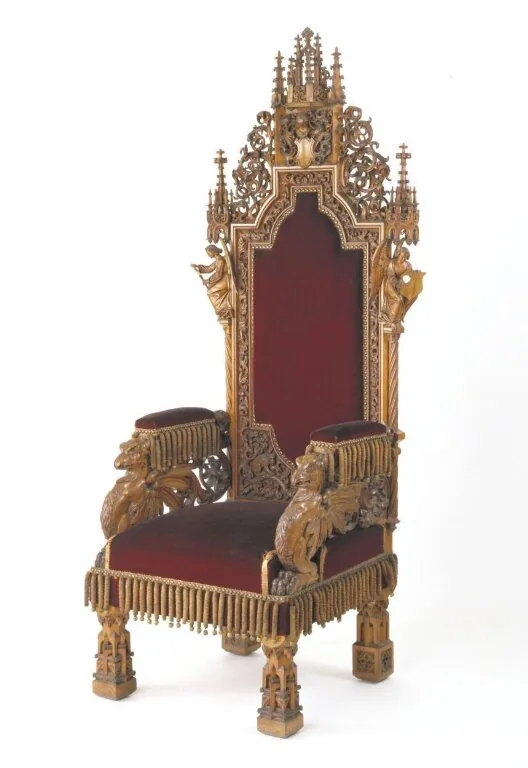
Queen Victoria’s Gothic armchair from the Coburg suite
W.10-1967Chairs through time
Created for the Great Exhibition of 1851, this richly carved seat later furnished Queen Victoria’s drawing room at Holyrood Palace. The catalogue follows a chair whose public exhibition life and royal domestic life were closely connected.
- Date
- c. 1851
- Place of origin
- Coburg
- Maker
- Rothbart, Ferdinand (designer); Kolb, Th. (designer); Thomas Hoffmeister and Theodor Behrens (manufacturer)
- Material
- Carved oak and pine, the upholstery of woollen plush and wool tassels, the nails brass.
- Collection / location
- Victoria and Albert Museum, London
- Accession
- W.10-1967
How it connects to Naomi’s work
The Extraordinary in the Ordinary: Chairs for Viewing the World through Time / 卓椅非凡:穿梭時空看世界 (2014)
The V&A set record cites Naomi Yin-yin Szeto’s 2014 catalogue, p.84, and identifies one member as lent under W.10C-1987. The same record catalogues the suite as W.10-1967.
Catalogue p. 84; V&A API record.bibliographicReferences
One member of the Coburg chair suite, represented through the V&A set record.
CHAIR-006Italian carved and partly gilded stool
23-1891Chairs through time
A stool could quietly express a person’s place in the household. This Renaissance example appears in the catalogue’s discussion of seating, with a history shaped by both early use and later restoration.
- Date
- 16th century (The seat replaced in the 19th century)
- Place of origin
- Italy
- Material
- Walnut wood, carved and partly gilded
- Collection / location
- Victoria and Albert Museum, London
- Accession
- 23-1891
How it connects to Naomi’s work
The Extraordinary in the Ordinary: Chairs for Viewing the World through Time / 卓椅非凡:穿梭時空看世界 (2014)
The holding museum explicitly cites Naomi Yin-yin Szeto’s 2014 catalogue, page 135. It explicitly states this object was lent to the exhibition.
Catalogue p. 135; V&A API record.bibliographicReferences
CHAIR-007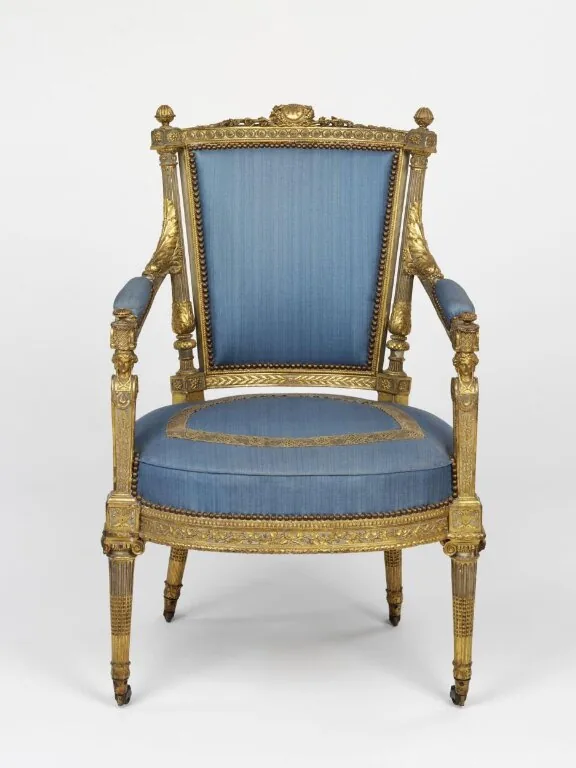
Armchair bearing Marie-Antoinette’s MA monogram
W.7-1956Chairs through time
The royal monogram turns an elegant chair into an object of personal identity. The V&A identifies this armchair in Naomi Szeto’s catalogue while explicitly stating that it was not lent to the Hong Kong exhibition.
- Date
- ca. 1785-ca. 1790
- Place of origin
- Paris
- Maker
- Sené, Jean-Baptiste-Claude (menuisier; attributed to)
- Material
- Walnut, carved and painted, upholstered in silk
- Collection / location
- Victoria and Albert Museum, London
- Accession
- W.7-1956
How it connects to Naomi’s work
The Extraordinary in the Ordinary: Chairs for Viewing the World through Time / 卓椅非凡:穿梭時空看世界 (2014)
The holding museum explicitly cites Naomi Yin-yin Szeto’s 2014 catalogue, page 164. It explicitly states the object was NOT lent to the exhibition.
Catalogue p. 164; V&A API record.bibliographicReferences
CHAIR-008Gouty chair with hand-cranked propulsion
W.103-1978Chairs through time
This upholstered armchair could move with its sitter. Handles on the arms turned the wheels, bringing mobility into the familiar shape of a comfortable chair. Naomi Szeto’s catalogue features the V&A example on page 261.
- Date
- ca. 1800
- Place of origin
- England
- Material
- Mahogany, with brass fittings and black horsehair upholstery
- Collection / location
- Victoria and Albert Museum, London
- Accession
- W.103-1978
How it connects to Naomi’s work
The Extraordinary in the Ordinary: Chairs for Viewing the World through Time / 卓椅非凡:穿梭時空看世界 (2014)
The holding museum explicitly cites Naomi Yin-yin Szeto’s 2014 catalogue, page 261. It explicitly states this object was lent to the exhibition.
Catalogue p. 261; V&A API record.bibliographicReferences
CHAIR-009Carved walnut bidet with Moustiers earthenware bowl
478 toB-1905Chairs through time
A chair could conceal the practical work of personal hygiene. This elaborately carved bidet also asks a second question: how old is an antique? The V&A now considers it a later imitation of an eighteenth-century form.
- Date
- 1870-1890 (probably, in imitation of bidets of the mid-eighteenth century); ca. 1870-1890
- Place of origin
- France
- Maker
- Moustiers pottery factory (manufacturer; bowl)
- Material
- Carved walnut, the bowl of tin-glazed earthenware
- Collection / location
- Victoria and Albert Museum, London
- Accession
- 478 toB-1905
How it connects to Naomi’s work
The Extraordinary in the Ordinary: Chairs for Viewing the World through Time / 卓椅非凡:穿梭時空看世界 (2014)
The holding museum explicitly cites Naomi Yin-yin Szeto’s 2014 catalogue, page 269. It explicitly states this object was lent to the exhibition.
Catalogue p. 269; V&A API record.bibliographicReferences
CHAIR-010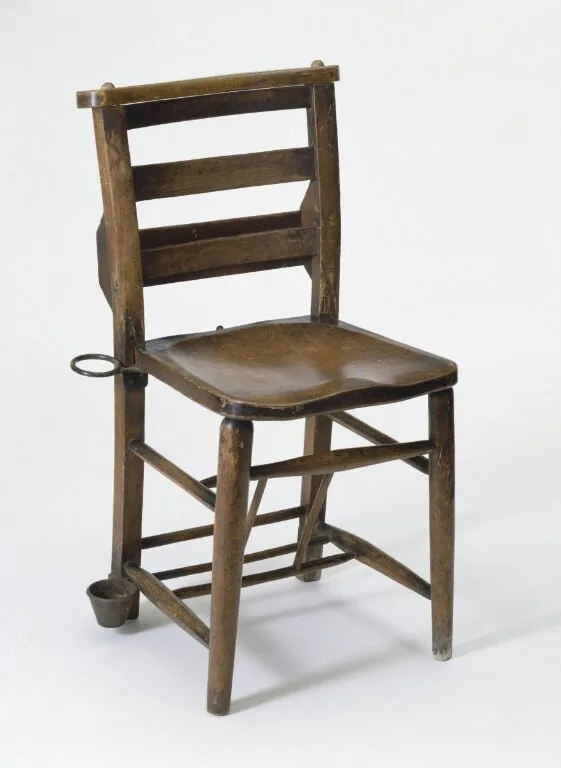
Church chair from St Philip’s Cathedral, Birmingham
W.38-1980Chairs through time
A small set of fittings reveals how a chair supported worship: space for hymn books, an umbrella or walking stick holder, and a hook for a kneeler. It appears in the catalogue, although the V&A says the chair itself remained at home.
- Date
- 1860-1875
- Place of origin
- Great Britain
- Material
- Beech, with an ash seat and cast iron fittings
- Collection / location
- Victoria and Albert Museum, London
- Accession
- W.38-1980
How it connects to Naomi’s work
The Extraordinary in the Ordinary: Chairs for Viewing the World through Time / 卓椅非凡:穿梭時空看世界 (2014)
The holding museum explicitly cites Naomi Yin-yin Szeto’s 2014 catalogue, page 359. It explicitly states the object was NOT lent to the exhibition.
Catalogue p. 359; V&A API record.bibliographicReferences
CHAIR-011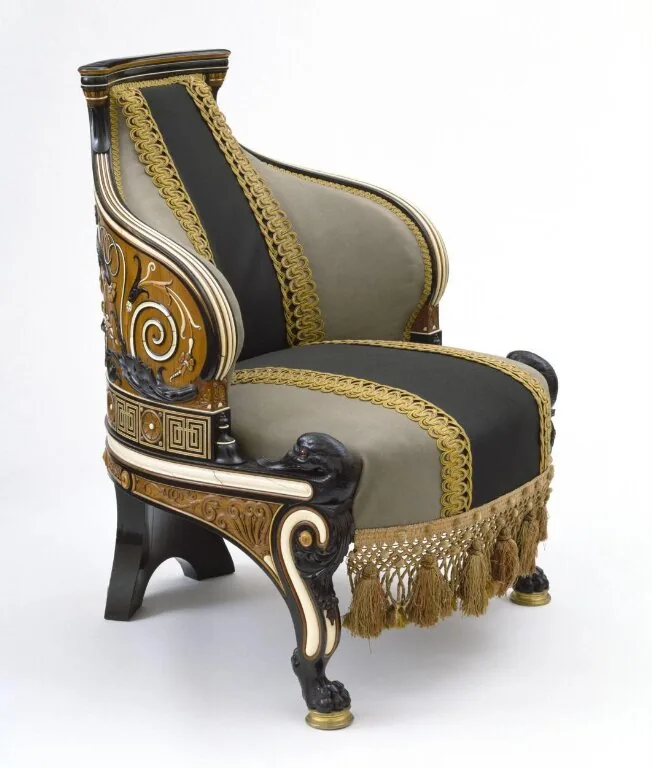
Alma-Tadema armchair for Henry Gurdon Marquand’s music room
W.25:1, 2-1980Chairs through time
A painter’s vision of antiquity became a room someone could inhabit. Lawrence Alma-Tadema designed this richly inlaid armchair for Marquand’s New York music room. The catalogue includes it; the V&A expressly records that it was not lent.
- Date
- 1884-1886
- Place of origin
- London
- Maker
- Alma-Tadema, Lawrence (Sir) (designer); Johnstone, Norman and Company (maker)
- Material
- Mahogany, with cedar and ebony veneer, carving and inlay of several woods, ivory and abalone shell, replaced upholstery
- Collection / location
- Victoria and Albert Museum, London
- Accession
- W.25:1, 2-1980
How it connects to Naomi’s work
The Extraordinary in the Ordinary: Chairs for Viewing the World through Time / 卓椅非凡:穿梭時空看世界 (2014)
The holding museum explicitly cites Naomi Yin-yin Szeto’s 2014 catalogue, page 387. It explicitly states the object was NOT lent to the exhibition.
Catalogue p. 387; V&A API record.bibliographicReferences
CHAIR-012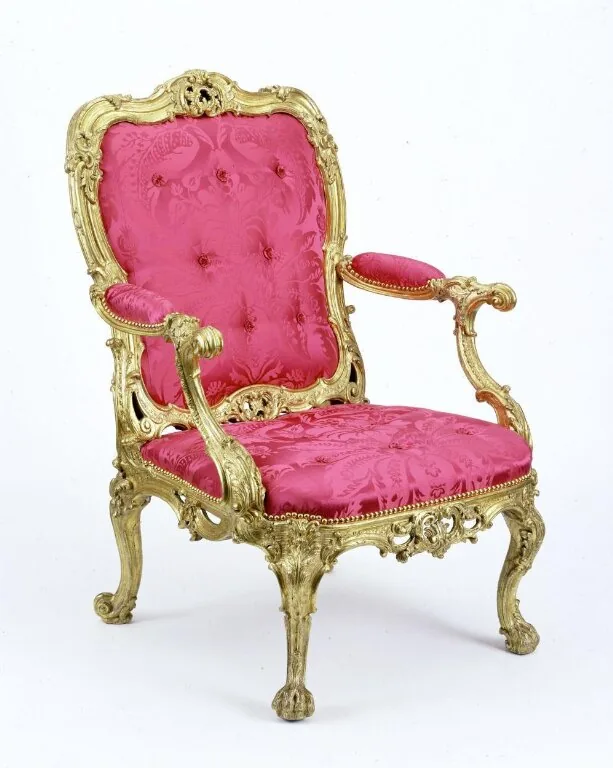
Richard Cosway’s sitter’s chair
W.1-1973Chairs through time
One chair can appear in many different lives. Richard Cosway used this Rococo armchair as a studio prop, allowing its curves to pass from furniture into portraits. It is a confirmed catalogue illustration, with no physical loan to Hong Kong.
- Date
- ca. 1755
- Place of origin
- London
- Maker
- Lock, Matthias (designer and maker)
- Material
- Limewood and pine, carved and gilded; modern silk damask upholstery
- Collection / location
- Victoria and Albert Museum, London
- Accession
- W.1-1973
How it connects to Naomi’s work
The Extraordinary in the Ordinary: Chairs for Viewing the World through Time / 卓椅非凡:穿梭時空看世界 (2014)
The holding museum explicitly cites Naomi Yin-yin Szeto’s 2014 catalogue, page 392. It explicitly states the object was NOT lent to the exhibition.
Catalogue p. 392; V&A API record.bibliographicReferences
CHAIR-013Folding carrying chair
W.3:1, 2-1950Chairs through time
The seat lifts, the sides fold and the back drops down. This portable chair was designed to collapse for travel and to receive carrying poles, linking furniture to transport and care. The V&A confirms its catalogue entry and Hong Kong loan.
- Date
- ca. 1780 (Possibly); ca. 1870
- Place of origin
- Great Britain
- Material
- Mahogany, with cane seat and iron and brass fittings
- Collection / location
- Victoria and Albert Museum, London
- Accession
- W.3:1, 2-1950
How it connects to Naomi’s work
The Extraordinary in the Ordinary: Chairs for Viewing the World through Time / 卓椅非凡:穿梭時空看世界 (2014)
The holding museum explicitly cites Naomi Yin-yin Szeto’s 2014 catalogue, page 421. It explicitly states this object was lent to the exhibition.
Catalogue p. 421; V&A API record.bibliographicReferences
CHAIR-014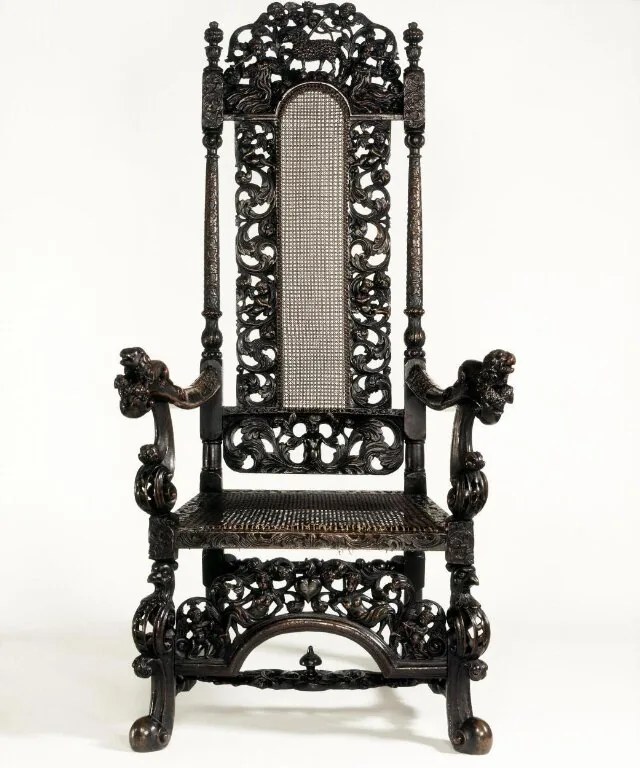
Caned walnut armchair with lamb-and-flag crest
W.16-1955Chairs through time
The tiny emblem at the top of this chair has prompted a large historical question. A lamb and flag may connect it to a religious institution. The chair’s catalogue entry offers a route into the evidence behind an attribution.
- Date
- 1700-1720
- Place of origin
- England
- Material
- Carved walnut, with caned seat and back
- Collection / location
- Victoria and Albert Museum, London
- Accession
- W.16-1955
How it connects to Naomi’s work
The Extraordinary in the Ordinary: Chairs for Viewing the World through Time / 卓椅非凡:穿梭時空看世界 (2014)
The holding museum explicitly cites Naomi Yin-yin Szeto’s 2014 catalogue, page 443. It explicitly states this object was lent to the exhibition.
Catalogue p. 443; V&A API record.bibliographicReferences
CHAIR-015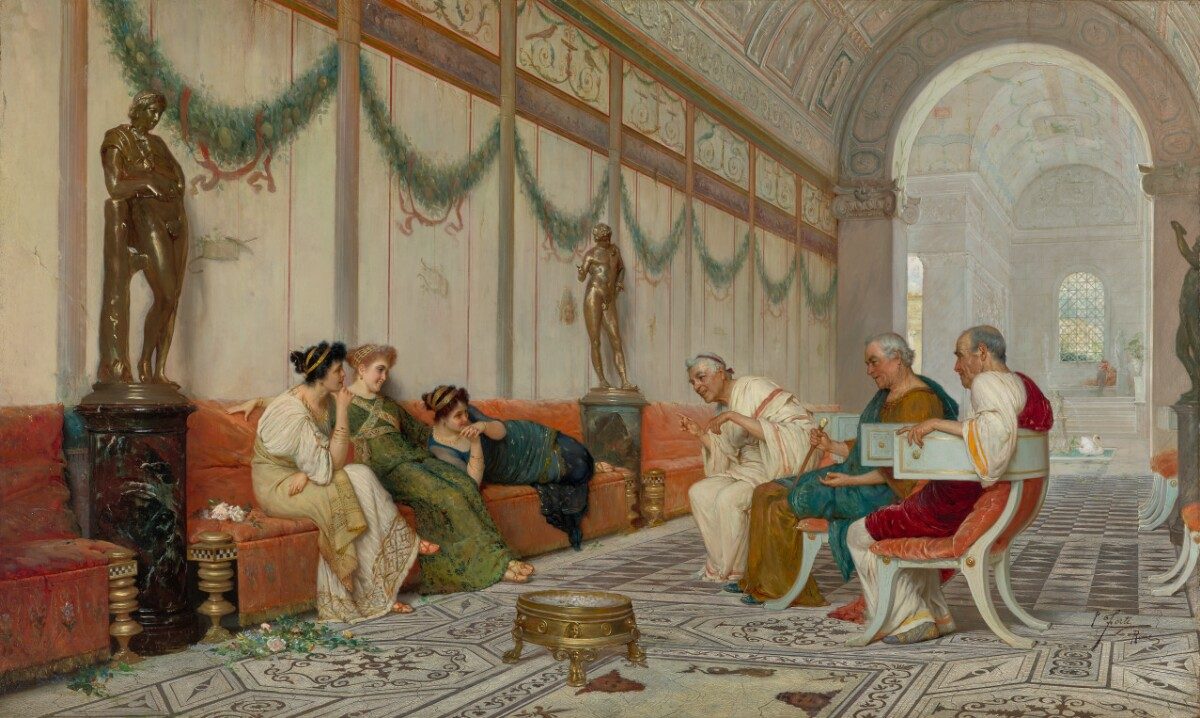
Interior of Roman Building with Figures
78.PA.72Chairs through time
An imagined Roman gathering helps tell the history of a real chair form. Forti built his scene from classical models, including the curved klismos chair. Getty records the painting as an illustration in Naomi Szeto’s 2014 catalogue.
- Date
- Late nineteenth century
- Maker
- Ettore Forti
- Material
- Oil on canvas
- Collection / location
- J. Paul Getty Museum
- Accession
- 78.PA.72
How it connects to Naomi’s work
The Extraordinary in the Ordinary: Chairs for Viewing the World through Time / 卓椅非凡:穿梭時空看世界 (2014)
Getty’s bibliography explicitly identifies Szeto’s catalogue p.37, illustrated.
Catalogue p.37, ill.; Getty Bibliography
CHAIR-016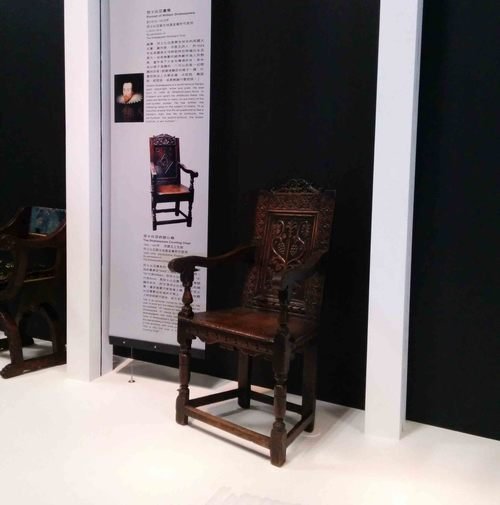
Bidford Chair / Falcon Inn Chair
Chairs through time
Naomi Szeto travelled to the Shakespeare Birthplace Trust to ask for this chair. Its legend claimed Shakespeare had sat in it during a drinking contest. Its date tells another story: it was probably made after he died. The tension between the object and the legend is the point of the story.
- Date
- c. 1630
- Material
- Wood (oak in historical descriptions; current Trust article describes dark wood)
- Collection / location
- Shakespeare Birthplace Trust
How it connects to Naomi’s work
The Extraordinary in the Ordinary: Chairs for Viewing the World through Time / 卓椅非凡:穿梭時空看世界 (2014)
Collections Manager Paul Taylor states that Naomi Yy Szeto visited in 2013 and requested this loan; he accompanied the Bidford Chair to Hong Kong in May 2014.
Paul Taylor, 11 July 2014; Emily White, 3 February 2022
CHAIR-017Wooden Stool with Latticework Bracing
古埃及格構小木凳(名稱譯述)37.45E (inferred match)Chairs through time
This small wooden stool survived for more than three millennia. Naomi Szeto drew attention to its curved seat: comfort mattered to its maker too. Comparable stools were found in Tutankhamun’s tomb, but this is not evidence that this stool belonged to the pharaoh.
- Date
- c.1539–1295 BCE, Dynasty 18, New Kingdom
- Material
- Wood, traces of ground and pigment in Brooklyn record
- Collection / location
- Brooklyn Museum (strong cross-source identification)
- Accession
- 37.45E (inferred match)
How it connects to Naomi’s work
The Extraordinary in the Ordinary: Chairs for Viewing the World through Time / 卓椅非凡:穿梭時空看世界 (2014)
Naomi discusses the ancient curved-seat stool in the official interview. Brooklyn’s museum record gives the same unusual period range and Tutankhamun comparison; the official photograph visibly matches latticework form. A contemporary SCMP interview explicitly identifies the stool as a Brooklyn Museum loan; the accession remains inferred.
News.gov interview and chair-p2.jpg; Brooklyn record 3951
CHAIR-018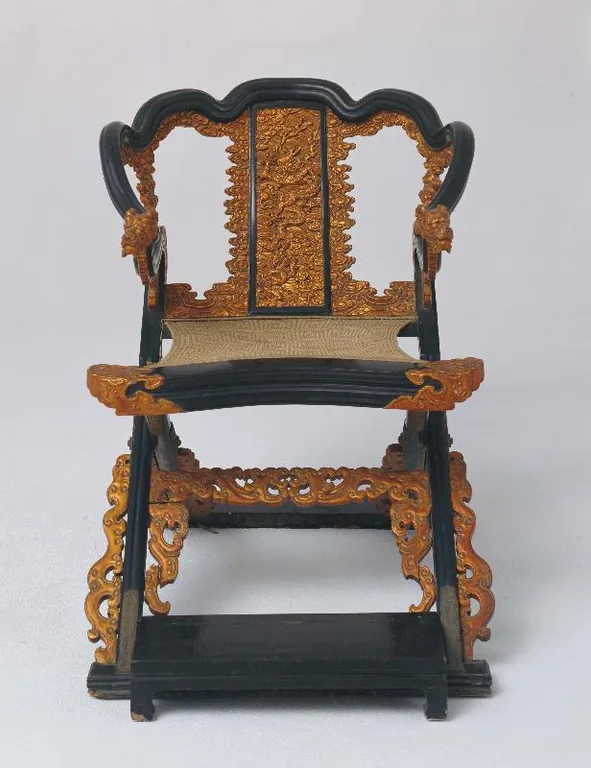
Black lacquered folding chair with cloud and dragon design in gold
黑漆髹金雲龍紋交椅Chairs through time
A folding chair becomes a statement of imperial authority. Dragon-headed arms, gold decoration and carved symbols surround the sitter. Naomi Szeto described finding a painting of Qianlong using this design, bringing furniture and its historical image together.
- Date
- Qianlong period, Qing dynasty (1736–1795), as presented in 2014
- Material
- Wood with black lacquer and gold decoration
- Collection / location
- Palace Museum, Beijing
How it connects to Naomi’s work
The Extraordinary in the Ordinary: Chairs for Viewing the World through Time / 卓椅非凡:穿梭時空看世界 (2014)
Named and discussed by Naomi in the government video; exact object featured in opening press caption.
Official interview; photo 1069386
CHAIR-019Hongli Enjoying Himself on a Snowy Day
弘歷賞雪圖Chairs through time
A painted scene can restore the missing person to a chair. Naomi Szeto’s team located this image of Qianlong enjoying snow with his sons to explain the imperial folding chair. The relationship between an object and its representation gives the viewer a way into court life.
- Date
- Qing dynasty
- Maker
- Unidentified Qing court painter
- Material
- Colour on paper (Palace Museum publication)
- Collection / location
- Palace Museum, Beijing
How it connects to Naomi’s work
The Extraordinary in the Ordinary: Chairs for Viewing the World through Time / 卓椅非凡:穿梭時空看世界 (2014)
Naomi explicitly describes the team’s work finding the painting to match the imperial folding chair.
Official interview; Palace Museum journal reproduction p 55
CHAIR-020Imperial antler armchair associated with Kangxi and inscribed by Qianlong
鹿角椅故00207860 (strong object match; exhibition does not print accession)Chairs through time
A hunting trophy became a family lesson. The Palace Museum connects the antlers to deer hunted by Kangxi; Qianlong’s 1772 poem expresses reverence for his grandfather. The chair joins craftsmanship to dynastic memory and instruction.
- Date
- Qing, Qianlong period in the current Palace Museum record; antlers associated with Kangxi’s hunts; Qianlong poem dated 1772
- Maker
- Unidentified Qing court craftsmen
- Material
- Deer antlers and bone; wood and ivory strip recorded by Palace Museum
- Collection / location
- Palace Museum, Beijing
- Accession
- 故00207860 (strong object match; exhibition does not print accession)
How it connects to Naomi’s work
The Extraordinary in the Ordinary: Chairs for Viewing the World through Time / 卓椅非凡:穿梭時空看世界 (2014)
Official interview and closing release identify antler chair made from deer hunted by Kangxi. Palace Museum record故00207860 has the same historical association and Qianlong 1772 poem.
Palace Museum collection/gear/234358; official interview
CHAIR-021Black lacquer backrest inlaid with aromatic zijinding material
黑漆描金靠背非00000303 (matched by unique form/material)Chairs through time
This reclining support was made to engage the nose as well as the body. Aromatic tiles were built into its surface and frame, while a hinged support adjusted the angle. Its materials make the history of comfort unusually tangible.
- Date
- Mid-Qing (Palace Museum); described as Yongzheng’s in 2014 press
- Material
- Wood, black lacquer, gold decoration, aromatic zijinding inlays
- Collection / location
- Palace Museum, Beijing
- Accession
- 非00000303 (matched by unique form/material)
How it connects to Naomi’s work
The Extraordinary in the Ordinary: Chairs for Viewing the World through Time / 卓椅非凡:穿梭時空看世界 (2014)
Contemporary news identifies this unusual backrest among exhibition pieces; holding museum identifies the only large-scale zijinding-inlaid furniture example in its collection.
Palace Museum collection/gear/228969; June 2014 reporting
CHAIR-022Qianlong zitan throne, carved screen, incense stands and furnishings
紫檀雕花圍屏、寶座連香几Chairs through time
The imperial seat was part of a carefully arranged room. A tall carved screen, incense stands, a footstool and auspicious creatures framed the throne. The arrangement made authority visible before the emperor entered.
- Date
- Qianlong period, Qing dynasty
- Material
- Zitan wood for throne/screen/footstool as reported; associated ornaments unspecified
- Collection / location
- Palace Museum, Beijing
How it connects to Naomi’s work
The Extraordinary in the Ordinary: Chairs for Viewing the World through Time / 卓椅非凡:穿梭時空看世界 (2014)
Contemporary exhibition reporting explicitly describes the carved zitan throne, screen, incense stands, footstool and display ornaments; another report identifies luduan beside it.
on.cc June 6 and Phoenix/China News June 7 reporting
CHAIR-023Austrian antler chair paired with the Chinese imperial example
Chairs through time
The exhibition placed antler chairs from Austria and China in conversation. Their shared material opened a comparison of hunting, rank and dynastic memory, while the Chinese example carried a specifically Manchu lesson.
- Material
- Antler
- Collection / location
- Austrian lender
How it connects to Naomi’s work
The Extraordinary in the Ordinary: Chairs for Viewing the World through Time / 卓椅非凡:穿梭時空看世界 (2014)
Official video identifies two antler chairs, one from Austria and one from China.
Official video transcript, comparison of antler chairs
CHAIR-024Tin Hau deity palanquin from Leung Shuen Wan
天后神輿Chairs through time
A seat could carry a deity through the community. Made in 1906, this Tin Hau palanquin formerly served the temple at Leung Shuen Wan in Sai Kung. Its procession connected a sacred image to the people outside the shrine.
- Date
- 1906
- Collection / location
- Formerly Leung Shuen Wan Tin Hau Temple, Sai Kung
How it connects to Naomi’s work
The Extraordinary in the Ordinary: Chairs for Viewing the World through Time / 卓椅非凡:穿梭時空看世界 (2014)
Official opening photo caption names the object, dates it 1906, and identifies its former temple and processional use.
Opening photograph 1069388
281 more catalogue entries
About this catalogue
This catalogue brings together book pages, museum collection records, exhibition documentation and later scholarship.
The 305 entries include 124 individual-object records, 22 sets or ensembles, 107 object types, 15 illustrated objects or designs and 37 publication or collection references. Related records connect groups, types and individual objects.
Download all 305 catalogue entriesRead the catalogue guide
Research updated 9 September 2026.
Look closely: the gold cup of eternal stability
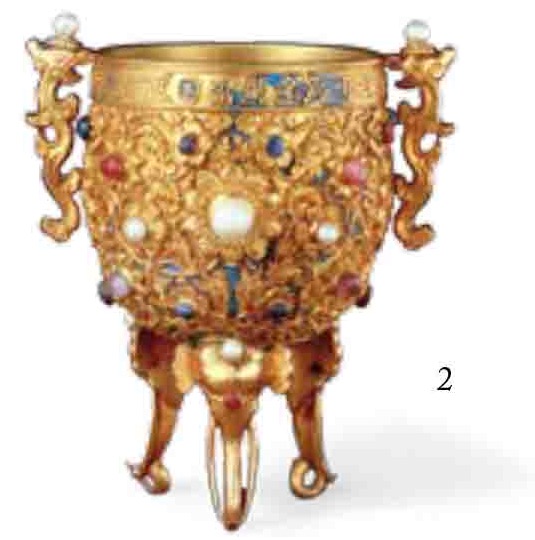
1The Gold Chalice of Eternal Stability
A jeweled gold cup holds a wish for a dynasty’s future. Naomi reveals how exquisite craftsmanship became part of an emperor’s New Year ritual.
Select a letter to look closer.
A. Dragon handles
Dragon-shaped handles flank the gold vessel. Naomi describes these details within a story of imperial ceremony.
Fascination and Affinity · p. 39